YouTube “Call-to-Action” Overlays: Untold Truth & Money-Making Tips July 1, 2009
Posted by Nalts in : advertising , 11commentsYouTube is debuting “call to action” overlays, which have some interesting applications for marketers and advertisers. This post dispels some confusion about this offering, and gives you tips to make stinkin’ amount of money on this functionality until everyone else catches up.
For some reason advertisers and marketers thought this functionality was already possible, but there were only two ways to create hyperlink overlays until now: a) a video owner could use an “annotation” to drive traffic to another YouTube page, or b) an advertiser could by Google Adsense cost-per-click or CPM ads (which appeared in the bottom 5th of video).
This new offering is really a “value-ad” to stimulate video owners to buy more of the undersold “promoted” videos, whereby the video owner pays YouTube a bid price (ranging from a penny to fifty cents) per click. Each time someone searches “prank,” I bid 1-5 cents per click. Like Google, it’s a low click-thru rate but I don’t pay unless they click. Chances are as a partner I’ll never make back the penny, but I’m experimenting to see how brands could benefit from this.
Again- here’s the criteria for this new offering, which is not being communicated well.
- First, you can’t use it if you’re a video owner or partner who isn’t buying cost-per-click ads to promote your own videos.
- Second, you can’t use this if you don’t own the video.
- You need to both OWN the video and be running pay-per-click ads to promote it.
Example- if you search “Nalts” on YouTube and you see my Garbage Can prank video, then you should see the text overlay ad (although it’s not working now, presumably because it’s being run through editorial approval). I’m not clear as to whether this prevents me from monitizing the video via InVideo ads or adsense ads.
TechCrunch reports this feature helped a charity raise $10K in one day. This could improve video’s ability to drive traffic, a primary objective for many advertisers. For instance, I spoke with a client in the travel industry yesterday that was not impressed with “impressions” and awareness, but on direct response. Could his digital advertising be linked to selling rooms?
Unfortunately, most campaigns have a very small click-thru rate (in my experience 2-3 percent is healthy). I worked on a recent promotion for a major network’s web property, and saw a healthy 6% rate (the percent of viewers that visited the destination site). But imagine if it was easier to find the link (instead of buried in the description tab, where the viewer must select “more” before even seeing the hyperlink.
So What, Nalts… How Do I make Stinking Amount of Money Using This?
Want to make some quick cash while the rest of the industry gets hip to this? This should work well temporarily because YouTube is the 2nd most-popular search engine after Google, and most advertisers aren’t exploiting it yet. You’re at a distinct advantage if you buy keywords on YouTube and have a video thumbnail (instead of a text ad) as a resulting ad, and you’re probably not facing the bid competition you might on Google for the same terms. So go forth and make money using these tips, and thank Uncle Nalts later.
- Create a destination website packed with some relevant information related to a sought-after area (like electronics, lawsuits, mortgages), and soak it with Google Adsense advertisements that yield high pay-per-clicks.
- Create videos about the topic, and encourage people to visit your website for important information. Keep the video SUPER short or you’ve lost ‘em.
- Post your videos, then bid on YouTube keywords via YouTube ads so people find your videos. Tag them well so you hopefully get some organic views too.
- Be sure your bid price is not more than you’ll make back (cap it at 1-5 cents and 5 bucks per day initially). If you spend 50 cents to get them on your video, and only migrate 10 percent, then you’ll need to make $5 per visitor to break even. But if you bid a nickel and migrate 20 percent, you have a decent margin as long as people click some of your Adsense ads.
- Now your “target” will hopefully convert well in three phases:
- from a YouTube search to your video (at a low price)
- from your video to your own publisher website (hopefully 10-20% of them)
- from your website to the websites paying high cost-per-clicks to publishers (at a higher income to you than you paid YouTube).
Oh by the way- this isn’t sustainable. Eventually people will bid up the keyword prices on YouTube making the delta less significant. And in general it’s hard to justify paying for ads when your model is ad dependent.
More information:
- The YouTube blog visitors are not impressed. They’re still petitioning YouTube to keep the “old” channel pages (see comments).
- Check out the YouTube advertiser and partner “business” blog.
- But here’s where you go to start a campaign (YouTube ads).
American Pie Advertising Song Parody: Mad Avenue Blues June 30, 2009
Posted by Nalts in : Online Video , 5commentsCheck out Mad Ave Blues, a song parody of “American Pie” that spoofs the demise of traditional media and upfronts… written by LMcDuff08 (via OnlineVideoWatch). It’s really well sung and written, and hits some key themes in funny ways. Even if it’s about 6 minutes longer than it needs to be… it only took a day to make!
And then there’s “music chairs,” which shows all of the churn of top digital-media executives.
How Social is Your Brand? June 29, 2009
Posted by Nalts in : Online Video , 14commentsI wrote about some “poor man” tools for social-media monitoring recently, and here’s a nice list of free social-media monitoring tools.
Among them, HowSociable is interesting because it gives you a free “score” that helps you compare your brands’ online activity relative to competitors. This, and more robust paid services, give brands a way to benchmark and show performance over time.
How TMZ Really Scooped Mainstream Press on Michael Jackson’s Death June 27, 2009
Posted by Nalts in : Online Video , 23commentsThursday night I was at my son’s first swim meet when I heard news about Michael Jackson being rushed to the hospital. While others searched Google news to no avail, I jumped on Twitter and found a number of third-hand reports that Jackson was dead. The only source listed was AOL-owned gossip website, TMZ. Here’s one report of how TMZ scooped CNN and, according to some reports, the coroner.
So now I’m thinking of a parody video that replicates the EMR rushing Jackson to the hospital. Grainy footage of the ambulance and paramedics screaming away paparazzi. Naturally we don’t see Jackson’s face because that’s logistically difficult, and would certainly be a HIPAA violation. One EMR gets a cell call from TMZ editor Harvey Levin, who promises $10,000 for first-hand status updates but $25,000 for news of Michael Jackson’s death. The other paramedic shrugs, and pinches the IV line, which flatlines the King of Pop. “Should we say a prayer or something?” asks the ethics-devoid EMR.
There are at least 3 things that will probably stop me from actually shooting this bit. First, it’s already late as viral satires go. Second, I’ll need to convince a friend to let me use an actual ambulance, and that has some risks if the video was to travel. Thirdly, it’s somewhat dark and tasteless… even if the satire is not at the expense of Jackson but on the ethical implications of paying sources. Levin reports that he doesn’t pay nurses or police, but he did provide quotes that suggest a paramedic might have been the source.
Can someone charged with saving a life be “under the table” incentivized to provide details of a celebrity death? That’s pretty frightening, and if I was a hospital I’d do some serious digging.
Here’s some actual footage obtained by Hollwood.com of the ambulance exterior (as precious time is wasted trying to backup the ambulance). But what happened inside? The world may never know…
Baby Monkey Hugs Pigeon June 27, 2009
Posted by Nalts in : Online Video , 6commentsAhhhhh. I’m going to think of this the next time I’m restless, anxious and pissed. I suppose this monkey’s mama never warned it that pigeons “breath disease.” (My mom used to warn me they “breed disease,” but I missed a consonant because she had a thick nawlins accent).
Poor Man’s Guide to Social-Media Monitoring June 27, 2009
Posted by Nalts in : Online Video , 6commentsI usually encourage people at conferences to do two things the next morning because they’re easy and free. Create a Google alert for their brand name. And subscribe to the keyword of their brand name via YouTube (yes you can subscribe to receive alerts every time a word is used). This can get annoying, as it seems vogue to use Nalts and 75 other names in your video tags as if that will possibly drive views).
Here’s a list of social-media monitoring tools and services that JD Beebe put together: The New Anti-Social: Free Ways to Track and Trend Online (and a Few Ways to Pay, too). A lot of these allow you to track ala Yahoo Buzz what’s hot. But few allow precise trend info on niche words, or show brand sentiment over time (envision a chart that showed Domino’s reputation pre and post booger sandwich).
Below are some free ones, since the Visible Measures and Nielsen Buzzmetrics are not inexpensive. Between the higher end services and these below, I’d add Vocus. This is a service I recently discovered that offers some cool tools for monitoring online and offline, and the company owns PRWeb so it has a lot of vehicles to contact journalists by segment.
- Trendrr.com: Easily create new tracking trends on a myriad of platforms. Easily track trends of Facebook Application use, Craigslist jobs, last.fm stats, google news, amazon/ebay products, google search results, twitter results, flickr and friendfeed stats, Facebook EVENT tracking, tons of video sites tracking, and some compete.com analysis.
- http://www.google.com/trends: Use keywords to track Google Search queries throughout time, check stories on a timeline and see geographically where the buzz is coming from. Simply adding Google Analytics to our site will increase this information (also free).
- http://blogpulse.com/trend: BlogPulse Trend Search allows you to create graphs that visually track “buzz” over time for certain key words, phrases or links. Compare search terms/links in isolation, or use all three fields to compare search terms/links against others.
- http://technorati.com/chart/: Technorati Tracking. Technorati charts allow you to visualize the impact an individual tag has on the Blogosphere by graphing the number of times the tag occurs in blog posts across the web. You can build a chart to graph one tag or compare up to five tags at once. Once you are satisfied with a chart, add it as a widget on your own blog.
- If you’re interested in tracking Twitter, there are more tools out there than humans actively using Twitter. Go get ‘em.
Danny Devito Reported Alive June 26, 2009
Posted by Nalts in : Online Video , 5commentsMy sources have it that Danny Devito has been reported alive. TMZ is not commenting. Go, Reubnick. A serious LOL.
4 Steps to Proving Online Video Can Sell June 26, 2009
Posted by Nalts in : Online Video , 12commentsRead this post completely, because there’s going to be a test. And your future depends on it if you’re an online-video advertiser, creator or even watcher (who would rather endure ads than not pay for content, and yes I meant to say it that way).
Although I was recently a Product Director, most of my career has been focused at digital marketing. So when I bought traditional media, I deferred significantly to our company’s media buyer specialist and our buying agency. I pretended to understand the cost for reach and frequency, but the reality is that my eyes glazed over at promises of awareness levels and GRPs. They were meaningless excel sheets with large numbers that meant little to me. I just didn’t care. All I wanted to do was ensure that a dollar spent yielded a few dollars back in profit.
So when I read Jim Louderback’s article about web video advertising and CPMs of $100 and content creators paying 25 cents per view, I developed instant symptoms of pre-menopause.
We lamented at the current state of online video buying like the only two people at a Grateful Dead show that weren’t spinning in circles and seeing Abraham Lincoln in trees.
Louderback, CEO of Revision3, told me about his thoughts on Microsoft Vista’s obsession with reach and frequency, and how little it did to move product. Put less kindly, he says Microsoft murdered Vista buy buying broadly instead of targeted (I’d argue the engineers deserve some credit for that debacle).
At the risk of offending a media buyer, let me speak as a marketer… whose money you are trusted to spend wisely. You dazzle and confuse me. You tell me I’m getting great reach and recall but I don’t care. I think you’re really attractive, but I know you’re excited about a property because the rep took you to lunch last week. I just want to know that my revenue increases in excess of my spend (hopefully 3-5 times as much). So when you’re making a buy on the brand’s behalf, please consider impact more than reach. Reach and even targeting can’t move product without impact.
In the case of online video, why would anyone sponsor a show for a dime unless it had a good reason it could sell at least 30-50 cents of product? Why would someone pay for a view unless that view could sell a product? There are countless studies that show that banners are not seen, so I’d need to be proven otherwise before even a stupid 50-cent CPM buy made sense. The InVideo ads have been proven to work (Dynamic Logic) better than preroll or banners (download IAB report), but that depends on the creative and how immune we get to them (do you honestly think this click-thru data from last year is true today?). Most importantly, it depends on when the ad is served since most never finish a video (TubeMogul), and our eyes hover around the close button like Doctor Evil on the laser button.
But if the video content itself includes the brand – like Coke does with American Idol — it’s quite hard to miss. There’s also an implied endorsement because Simon, Paula and Randy are drinking Coke rather than Coke boasting about itself. That’s where the brands need to be unless our ads are as delightful as a Pixar film and we have audiences glued to seats.
Okay- I’m getting off my soap box now, and leaving you with Uncle Nalts’ 4 steps (and they’re using alliteration so even the thickest media buyer will remember it) . These are the tasks of everyone vested in the success of online-video, which will be driven in the foreseeable future by advertising not consumer micro-payments. Who has had success? Who’s ready to share? Who is ready to get answers? Believe me, this is a “rising tide floats all boat” initiative. We can do our quiet case studies that says we’re better than the next guy, or we can demonstrate collectively to brands and media buyers that this medium is the most accountable one since paid search. This is perhaps more vital than the radical shift of consumers from broadcast “lean back” to online-video “lean forward.”
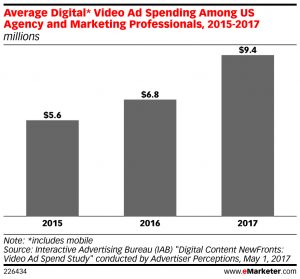
Seriously- it won’t matter if online-video represents 4, 10 or 20% of video consumption in 2010 if we can’t prove it can compel a purchase! eMarketer will have to change its estimates on ad spending if we cooperate.
1) Educate: A CPM is NOT a CPM. Comparing apples to apple-flavored Halloween candy from 2004. I’m writing a piece for iMediaConnections about this. Simply put, a letter from a friend is going to have more impact than junk mail… even if they both arrive via the mailbox. Video ads and host-sponsored content are both delivered via video, but that’s where the differences end.
2) Relate: Use offline analogies. I love the Vista example. I’m not suggesting Coke bag advertising, but I have to believe there’s more value in the Coke green room than the DVR-blocked ad.
3) Substantiate: Someone has to survey video watchers, to understand — at the moment from their perspective — what ads impact them most: an ignored banner or a trusted star/show with a good placement. If you’ve done it, I doubt the media buyers know.
4) Calculate: the Holy Grail is to show via test/control or pre/post (Dynamic Logic, Comscore, Insight) that contextual and relevant video messaging is worth exponentially more than wrap-around banners or existing IAB standards (see IAB report for best practices) . It’s intuitive, but data will make a media-buyer’s life easier… so they know that an impression isn’t an impression unless it makes an impression (I just coined that, so don’t forget to copyright me). Now you can get back to lunch with the media properties.
Failblog: Bolivian Television Station Mistakes “Lost” Photos for Air France Crash June 23, 2009
Posted by Nalts in : Online Video , 7commentsMan I love Failblog. It’s like “The Onion” only real. Last weekend while recovering from being out past my bedtime Friday night, I watched maybe 20 of them. Tonight I found this gem. A Bolivian television station shows images of what it believes to be the Air France crash, and are actually blurred photos from NBC’s “Lost” (did you know that was the original name of “Land of the Lost”?).
We have some editorial embellishment here because I doubt the b-roll of the Oceanic flight made the Bolivian telecast along with the photos, but it’s still a wonderful FAIL. And perhaps a WIN for the person that sent in the images, knowing full well that the race for visuals was too tasty for some networks to scrutinize.
Learn Inexpensive Special Effects via Film Riot June 23, 2009
Posted by Nalts in : Online Video , 1 comment so farIf you haven’t discovered “Film Riot” (Revision 3), check out the past few episodes to learn how to fake a gun shot, snap an arm in half, or make daylight look like night time. You don’t have to be a desktop wizard for all of them — the gun shot effect is as simple as fake blood blown through a tube.